


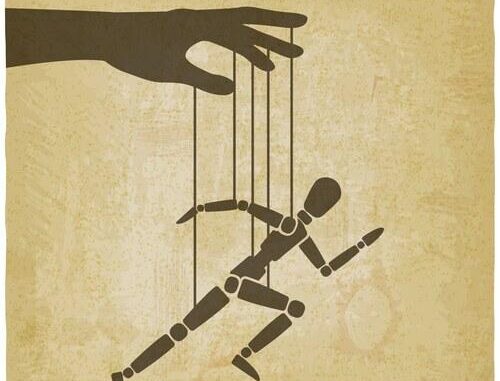
Before proceeding, readers may wish to review the original paper that prompted this article: “The Russian Reflective Control: Theory and Military Applications” by Joao Ricardo da Cunha Croce Lopes. The paper can be found here:
https://www.sciencepublishinggroup.com/article/10.11648/j.com.20251201.12
The discussion below is a commentary on that paper and the broader questions it raises concerning information warfare, influence operations, and the possibility of a scientific approach to persuasion.
One of the more interesting assumptions in modern geopolitical analysis is that Russia possesses some unique understanding of psychological warfare. This belief appears frequently in discussions of “Reflexive Control,” a Russian theory describing how perceptions can be shaped in ways that encourage an opponent to make decisions favorable to the initiator. The concept is real and worthy of study. What is less clear is whether the underlying ideas are uniquely Russian or merely a Russian attempt to formalize principles of influence that have been recognized by governments, propagandists, advertisers, and intelligence services for centuries.
It is an interesting concept, although I suspect the Russians receive too much credit for inventing something that human beings have practiced since the first tribal chief convinced another tribal chief to attack the wrong hill.
The paper presents Reflexive Control as a uniquely Russian approach to conflict. I think it is more accurate to describe it as a Russian attempt to formalize influence into a coherent doctrine. There is a difference between creating a theory and creating the phenomenon itself.
The Soviet Union produced thinkers such as Vladimir Lefebvre who attempted to reduce influence, perception, deception, and decision-making to something approaching a science. The resulting literature is fascinating because it reveals how Russian strategists view conflict. They do not see information as merely supporting military operations. Information is part of the battlefield.
In that respect, they may be more candid than many Western writers.
American and British military doctrine contains its own vocabulary for influencing populations, shaping perceptions, disrupting adversaries, and managing narratives. Psychological operations, strategic communications, information operations, perception management, public diplomacy, cyber influence activities, and a dozen related fields all occupy similar territory.
The vocabulary changes more than the underlying objectives.
This is one reason I am skeptical whenever commentators speak of Russian information warfare as though it represents an entirely alien way of thinking. Anyone who has followed intelligence history for more than a few years eventually notices that governments tend to converge on many of the same ideas.
The methods evolve with technology, but the underlying logic remains recognizable.
If an adversary can be persuaded to misunderstand a situation, he becomes easier to predict. Likewise, if a population can be divided, collective action becomes more difficult. None of these observations required a Russian theorist to discover them.
What the Russians appear to have done is build a comprehensive framework around them.
The more interesting question is whether any government has actually discovered a reliable science of mass persuasion.
Reading the paper, one occasionally gets the impression that populations can be manipulated with sufficient precision if enough information is gathered and enough psychological levers are pulled. The twentieth century produced many theories along those lines. Some emerged from Moscow, others from London, Washington, Beijing, Paris, and Berlin, but history has not been especially kind to such ambitions.
Governments routinely misread their own populations. Intelligence agencies produce assessments that later prove wrong. Political campaigns spend enormous sums trying to predict voter behavior, only to discover that millions of people had different plans.
Human beings are difficult to model because they are not merely responding to information. They are responding to family histories, local culture, emotions, economic conditions, personal experiences, tribal loyalties, religious beliefs, resentments, aspirations, and a thousand other variables. The internet has complicated the problem even further.
A generation ago, information moved through a relatively small number of institutions. Today, almost anyone can participate in shaping narratives. Governments still possess immense influence, but they now compete with corporations, activists, independent journalists, content creators, online communities, foreign actors, and occasionally an anonymous individual with a laptop and an audience.
The result is a far more chaotic information environment than many twentieth-century theorists anticipated.
That does not mean influence operations are ineffective. Clearly, they can be effective. Advertising works. Propaganda works. Public relations works. Intelligence services would not invest billions of dollars in influence activities if they never produced results. What remains uncertain is the degree of control they actually provide.
The paper assumes that Russia’s campaigns in Estonia, Georgia, and Ukraine demonstrate the success of Reflexive Control. There is certainly evidence that information operations played an important role in those conflicts. Whether that proves the existence of a mature science of perception management is another matter.
I suspect the reality is less dramatic because every major power in modern history has eventually encountered events that refused to follow the script. That fact alone should make us cautious whenever someone claims to possess a complete theory of human behavior.
The Russians may have developed an impressive theory of influence. The Americans and British have developed their own versions. The Chinese undoubtedly have theirs as well.
What none of them appear to possess is a reliable method for turning complex societies into predictable machines.

Be the first to comment